Guide to making a career change
What is a career change?
A career change is a transition from one profession to another. It typically involves learning and using new skills and knowledge. While switching jobs may mean doing similar work at a different company, making a career change tends to be more holistic.
Why make a career change?
There are a lot of reasons that inspire a career change. Here are some of the most common:
- Work-life balance: One of the biggest reasons people consider changing careers is a desire to rebalance their time so they can focus more on other interests.
- Better pay: A career change can potentially help you increase your income and achieve your financial goals.
- Growth opportunities: Sometimes you reach the end of the road in a particular career path and need to pivot in order to keep advancing.
- Personal reasons: You might also want to pursue a career that’s more in alignment with your personal values or goals, or one that otherwise feels more fulfilling.
It’s common to feel the need to make a change for any, or even several, of these reasons over time as your priorities change, and as you grow as a professional.
Considerations when switching careers
After understanding the reasons why you’re considering a career change, it’s time to start digging a little deeper. This isn’t just about switching jobs, it’s about understanding how you want to change your professional identity. Here’s where you can start:
- Assess your skills and interests: What are you good at? What do you enjoy doing? Take stock of all your hobbies, volunteer work, side gigs, and any other experience. You’ve likely gained and used a lot of different skills through these activities that you may not have considered applying professionally.
- Do your research: Take the time to look into your various options. What kinds of roles are out there? What are the requirements for the kinds of roles you’d like to see yourself in? Is the industry growing? Knowing these kinds of things can help you make a more informed decision.
- Network as much as possible: A personal connection can often help get your foot in the door. Do you know anyone in the fields you’re interested in? If you do, start talking to them to see what their experience in the industry has been. Otherwise, you may need to join relevant online forums or attend industry events to make some new contacts.
How Career Dreamer can help you change careers
Career Dreamer, an experimental tool from Grow with Google, uses AI to help you explore new career possibilities. Researching new careers and assessing your current skills used to be a fairly large, manual task. Career Dreamer can help make it easier.
First, the tool will ask you questions about your current or previous roles, education, skills, and interests to create a “Career Identity Statement” that emphasizes your unique strengths. Career Dreamer makes self-assessment interactive, helping you understand your career and tell your story in an efficient and engaging way.
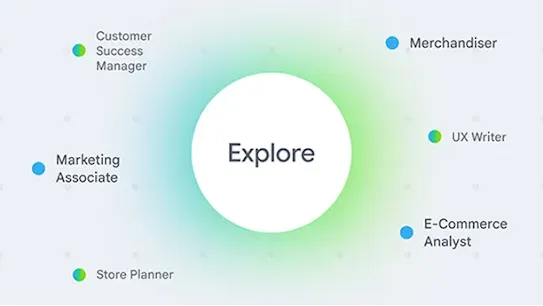
Next, it’ll create a map of career possibilities that match your experience, education, skills, and interests. You can then click on each one to get a summary of how it fits your unique background, and even find job listings for that role in your area.
Finally, if you’re ready to take the next step, find personalized starter prompts and jump to Gemini – your AI assistant from Google. There, you can explore careers in greater depth, workshop your resumes, or write compelling cover letters.
Create a career change action plan
Next, it’s time to create a career change action plan. A good plan follows the SMART framework: specific, measurable, achievable, relevant, and time-bound. Here's what that looks like:
- Specific: Define your target role and industry. What exactly do you want to do, and in what field? Instead of “I want a better job,” try saying something like “I want to become a business intelligence analyst.” Then, go even further by assessing your skills and identifying gaps you’ll need to fill to be successful in your new career. Career Dreamer looks at your resume and background, helping you identify your strengths and see which skills you might want to develop for your next career.
- Measurable: Establish metrics to track your progress. How will you know you're on the right track? For example, instead of saying “I want to earn more money,” a statement like “I want to increase my net pay by $10,000 or more per year” gives you a clear indicator of the progress you need to make.
- Achievable: Remember to set realistic goals based on your current skills and resources. If you have no background in data analysis, for instance, you might want to start with a simple, introductory course before setting your sights on more advanced data modeling techniques for business intelligence.
- Relevant: Ensure your goals align with your overall career aspirations. If your goal is to get into business intelligence, you don’t need to spend time learning about IT, but you might benefit from a little bit of experience in project management or UX design.
- Time-bound: Set a deadline for achieving your goals, and be realistic – setting a timeline that’s too long can cause you to lose track of your goals, while setting a timeline that’s too short can be a quick way to feel discouraged when you miss the deadline. This could look like “I want to earn certificates in data analysis and business intelligence over the next six months, so I can start working as a business intelligence analyst within a year.”
Along with creating and working on your SMART career change goals, here are a few other things to potentially work on:
- Update your resume and LinkedIn profile: It helps to ensure that your resume and LinkedIn profile showcase recent, relevant experiences and provide a clear indicator of why you’re a high-value candidate.
- Network and apply for jobs: While individual research is an essential part of career planning, networking with people in your desired field (online or in-person) can help you both refine your career goals and identify unique opportunities.
Resume strategies for a career change
As an aspiring career changer, a few strategic resume tweaks can help you communicate your value more clearly and confidently. That means effectively highlighting your transferable skills, tailoring the resume to specific job requirements, and writing a compelling career statement. Luckily these are all things Career Dreamer and its “Jump to Gemini” feature can help with. Here are some pointers on getting started with each:
Highlighting transferable skills on your resume
Transferable skills – or, all the things you’ve learned from previous roles and life experiences – are a genuine super power for your career changer resume. The real key, however, is to also show potential employers just how these skills translate to the new role instead of just listing them. For example, instead of just saying you have “strong communication skills,” try something like “Successfully managed client relationships in a fast-paced environment that required clear communication and trust to close deals.”
Tailoring your resume for the role
Start by carefully reviewing the job description and identifying key skills and qualifications the employer is looking for. Then, try to organically integrate those keywords throughout your resume – this is something Gemini can help with. This shows employers that you understand what they’re looking for. For example, if a job description mentions “project management” or “Agile methodology,” it’ll help to list any projects you’ve taken lead on and mention any potential experience with other project management frameworks like Kanban or Scrum.
Writing a strong career identity statement
A career identity statement – sometimes called a resume summary, personal statement, or elevator pitch – is your chance to create a narrative that connects the dots between your varied experiences and your new desired career. This type of message is something you can communicate in a cover letter or during an interview, and it will enable you to explain why you’re making a career change, highlight particularly relevant skills, and generally clarify how your past has prepared you for a bright future in this field. Career Dreamer is designed to help you generate a compelling statement after answering just a few brief questions.
Finding your next career path
Choosing a new career is one of the most significant decisions you can make, and it will be a highly individualized choice based on your goals, experience, and skills. While Career Dreamer can help you discover a specific role that aligns with your unique background, you can also proactively consider other factors such as the industry you want to work within, and the foundational skill sets that can help you make the transition.
Considering industries for career changers
When planning a career pivot, consider how your existing skillset translates to other industries and their specific job requirements. While roles in technology or e-commerce may rely on foundational competencies like critical thinking and project management, the financial sector may involve stricter requirements such as formal certifications. It is helpful to identify where your transferable skillset can be fully utilized – such as applying administrative efficiency to a healthcare setting, or adapting customer service experience for digital retail.
Key skills to support a career change
Beyond exploring specific industries, another effective approach to making a career transition is to acquire versatile skills that are in-demand across a wide array of fields. These foundational skills align with functional roles like data analysis, project management, and digital marketing, but can add value to a wide array of career fields. By learning these highly portable skills, you can strategically apply your expertise in diverse fields, whether it's finance, non-profit, healthcare, or technology.
- Digital marketing: Skilled marketers rely on creativity, communication, strategic thinking, and an innate understanding of people. All of these are skills that can also be honed in a lot of other professions. Some common entry points into digital marketing include content marketing and strategy, social media, or search engine optimization (SEO).
- Project management: Being able to manage projects and lead teams is a universally needed skill. If you are organized and a strong communicator, learning project management could open doors in many fields.
- Data analytics: Data helps inform major decisions in nearly every industry. Learning data analytics helps you turn data into actionable insights, making you a valuable asset on any team.
- User experience design: Nearly every company needs a user-friendly website or an app, making UX design a valuable skill across various industries. This gives career changes more flexibility to find opportunities in many fields.
- Cybersecurity: Protecting valuable digital information is a foundational business requirement for every organization. Because cybersecurity and risk management are universal needs, professionals in this field can find roles supporting a wide range of industries.
- IT support: Every organization relies on technology and needs people to keep their systems running. IT support professionals are essential in all industries – from small businesses to large corporations – making it a stable and accessible entry point to a tech career.
- AI skills: As artificial intelligence transforms how companies operate, the ability to effectively use AI tools, manage AI-driven projects, and understand AI ethics is becoming a key cross-functional skill. Building a foundation in AI skills can differentiate you in roles across marketing, data analysis, IT, and more.
Making a successful career change comes down to two main things: recognizing and clearly describing the transferable skills you've gained in your previous roles, and learning new skills (like project management, data analysis, or IT support) to fill any gaps for the career you're aiming for. When you combine the strategy of looking at accessible industries with mastering these versatile skills, you create a clear, achievable plan for your transition.
Learn more
Making a career change can be an extremely rewarding experience. By carefully considering your options, developing a solid action plan, and leveraging available resources, you can navigate your career transition with confidence.
Discover your potential with Career Dreamer
Check out the experimental Career Dreamer tool from Grow with Google to discover potential career paths tailored to your background.
Acquire in-demand skills with Google Career Certificates
Explore Grow with Google Career Certificates to gain the foundational, job-ready skills needed to succeed in fields like data analytics, IT support, and cybersecurity.